What 3,500 active US importers tell us about Q1 2026 sourcing shifts
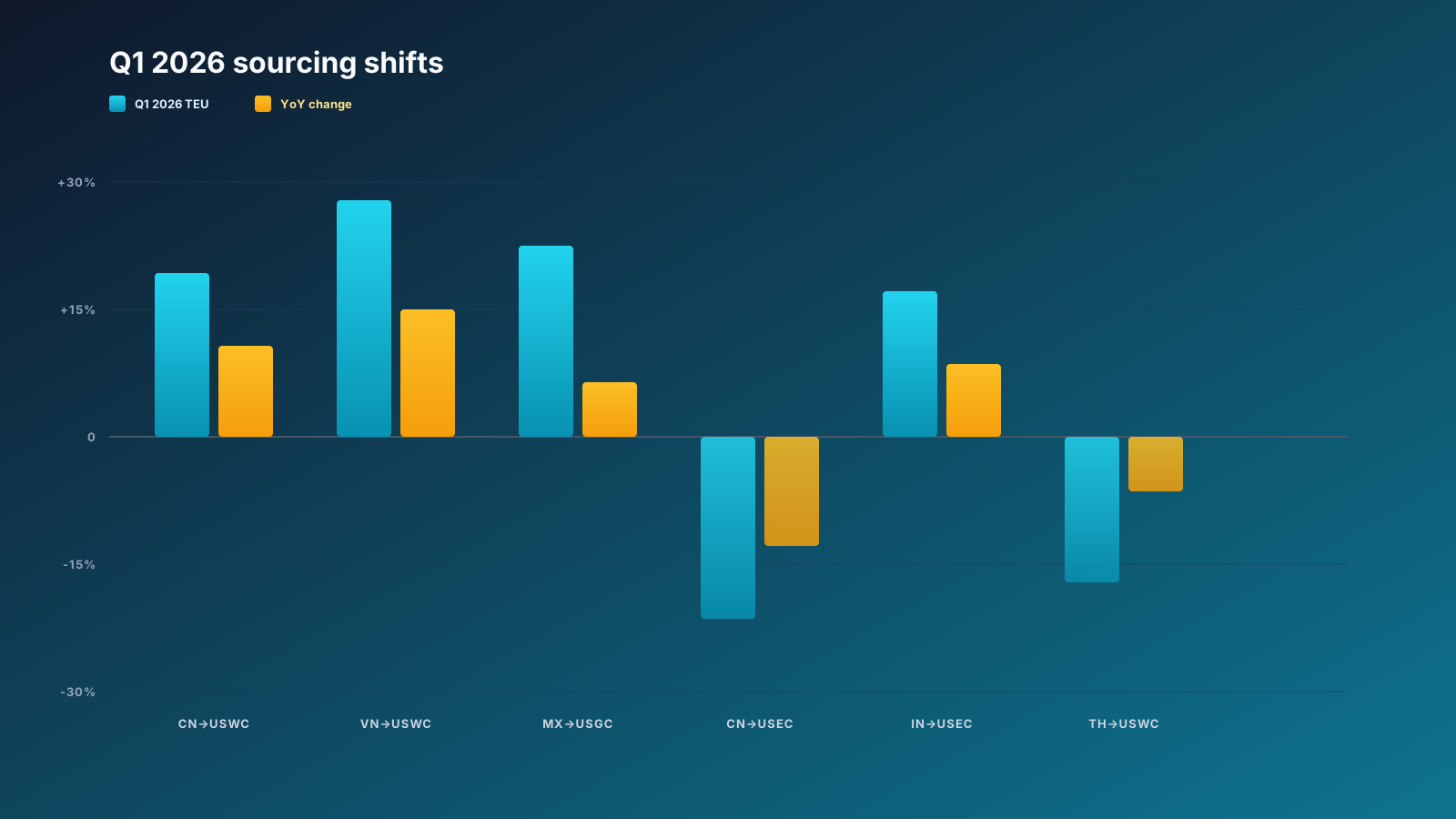
Trans-Pacific from Vietnam is up 14% YoY across the substantive importer cohort. Mexico→USGC is up 8%. Apparel is the lane mix that moved the most. Three patterns separate signal from noise.
Every quarter we run the same exercise on our substantive importer cohort — the 3,508 US companies in our directory with 10 or more Bill of Lading filings over the last 24 months. The question is simple: what is moving, where, and how much. The version of the answer that matters to a freight sales team is even shorter: which lanes are buyers actually shifting onto.
Q1 2026 has three patterns worth knowing. None of them are surprising in retrospect. All of them are worth re-pricing your prospect list around.
Pattern 1: Vietnam is up, but the speed is the story
Vietnam-origin TEU into the US West Coast is up 14% year-over-year across our cohort. The headline isn't the percentage — it's how fast importers swapped from China-origin to Vietnam-origin within the same SKU mix. Apparel and consumer electronics led. Mid-market brands (importers with $50M–$500M annual volume) moved faster than enterprise. If your prospecting list still treats VN→USWC as a niche lane, you are pricing for 2022.
Pattern 2: Mexico→US Gulf Coast crossed a real threshold
MX→USGC traffic was 8% above last Q1, the third consecutive quarter of high-single-digit growth. The implication: nearshoring through Mexico is no longer a thesis your customers are debating. They've already moved. The forwarders winning Gulf Coast accounts in 2026 are the ones who built a Laredo-Houston-New Orleans story two years ago and brought receipts, not the ones now scrambling for capacity.
Pattern 3: China→USEC is flat, and that itself is news
CN→US East Coast volume held within 1% of Q1 2025. After the post-Red Sea diversions in 2024 and the partial reversal back to West Coast routing in 2025, we expected continued downside. Instead, a subset of enterprise importers (think top-200 by TEU) committed to East Coast capacity through 2027 contracts and pulled the headline number sideways. For freight brokers selling allocation flexibility, the mid-market and below is where the real movement is happening — the enterprise cohort already signed.
What this means for the next 60 days
The teams that win Q2 build their target list around the importers who actually moved between January and April. We've tagged about 1,100 substantive importers in our cohort with a meaningful lane shift in the last 90 days. Those are the buyers in motion. They will either complete the shift with their incumbent carrier or rebid the new lane. The window between those two outcomes is where every freight RFP gets written.
If your team is still working a list from October, it's already a generation out of date. The shippers worth chasing right now are the ones whose lane mix changed between January and last Tuesday. That data is live inside LIT. The teams that act on it before the carrier contracts get signed are the ones writing 2026's growth story.