The hardest part of outbound sales in freight is not the writing or the list. It is the timing. A buyer who is happy with their current setup will not respond to your best email. A buyer whose freight just got reshuffled will read three emails and reply to two of them. Knowing which buyer is which on any given Tuesday is the entire job.
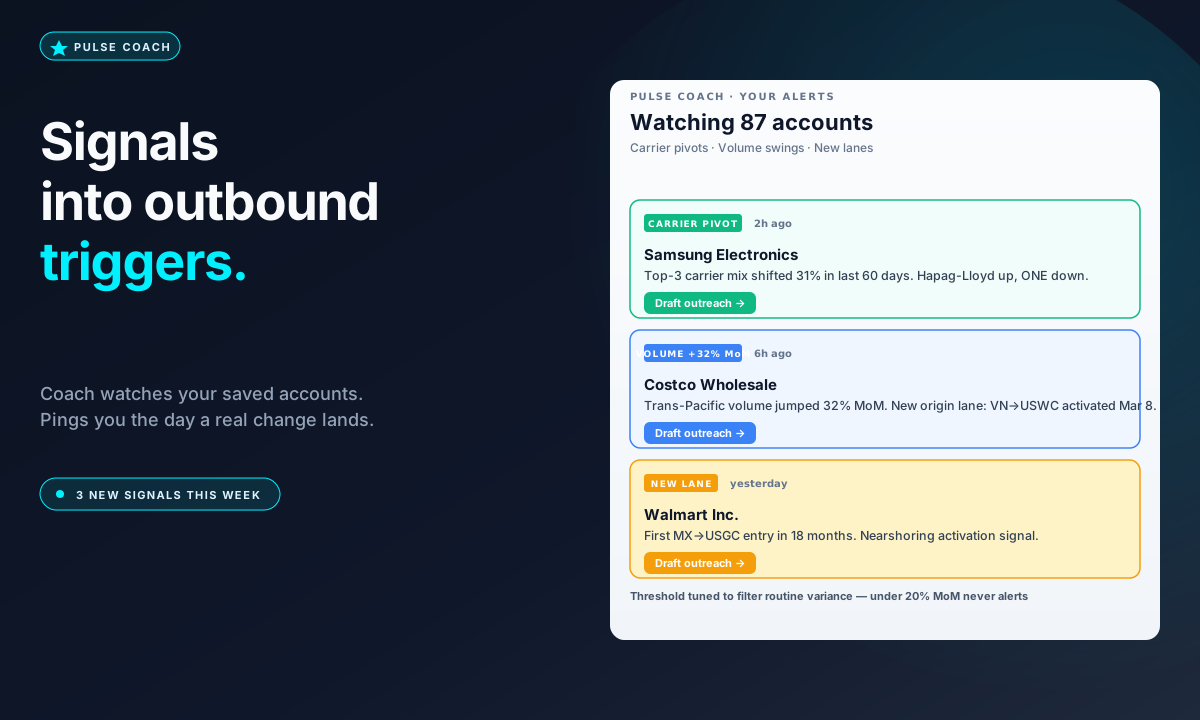
Pulse Coach is the system we built to surface the change-moments. It watches the accounts you've saved, parses their weekly Bill of Lading activity, and pings the rep the day a meaningful signal lands.
Demo on your top 3 lanes — we'll show you the saved-company workflow against your actual book of business.
The three signals worth chasing
Carrier pivots come first. When an importer's top-three carrier mix changes by 25% or more inside 60 days, something is happening. Either an allocation was lost, a contract is up, or service got bad enough to drive the operations team to fight for change. All three are buying signals. Coach flags the pivot, names the old and new carrier, and offers a one-line context sentence ready to drop into a sequence.
Volume swings come second. We flag any month-over-month delta over 20% — both directions. A 35% spike means a new program launched, a competitor's volume got reallocated, or a one-time surge is happening; the operations team is paying attention. A 25% drop means contracted volume is falling away from someone, and someone else has an opening. Coach tells you which is which.
New-lane signals come third. When an importer's port-of-entry profile changes — adding Houston when the year-long pattern was Long Beach, for instance — the supply chain just got reorganized. That decision was made by someone, usually under deadline pressure. They are reachable. They are interested in alternatives. They were probably not on your list a week ago.
Why signal-triggered outreach converts so much better
Signal-triggered sequences convert at materially higher reply rates than cold lists in our customers' campaigns. The reason is not the email. The reason is that the buyer is rethinking their setup the same week the email lands. Same words, same product, very different timing — and timing is the difference between an open and a meeting.
Operating model
The rhythm we see working: AEs add 80–150 accounts to their watchlist at the start of the quarter, Coach surfaces 8–15 signals per week across that list, and the rep works the signal-list first thing every Monday. By Friday the unsolicited reply emails start landing. The list that took a sales-ops team a week to build now generates working pipeline on its own — because the system is doing the surveillance the rep does not have time to do.
Coach is built into every LIT account. If your team is already saving target accounts, you already have the substrate. Turn on the signal types you care about, and the first useful ping should land within a week.