Pulse AI: natural-language intelligence over your trade graph
Ask in plain English: who's importing electric components from Vietnam, which Tesla suppliers shifted carriers last quarter, who's adding new West Coast lanes. Pulse AI runs those questions across 124M+ Bill of Lading filings and drafts the outreach.
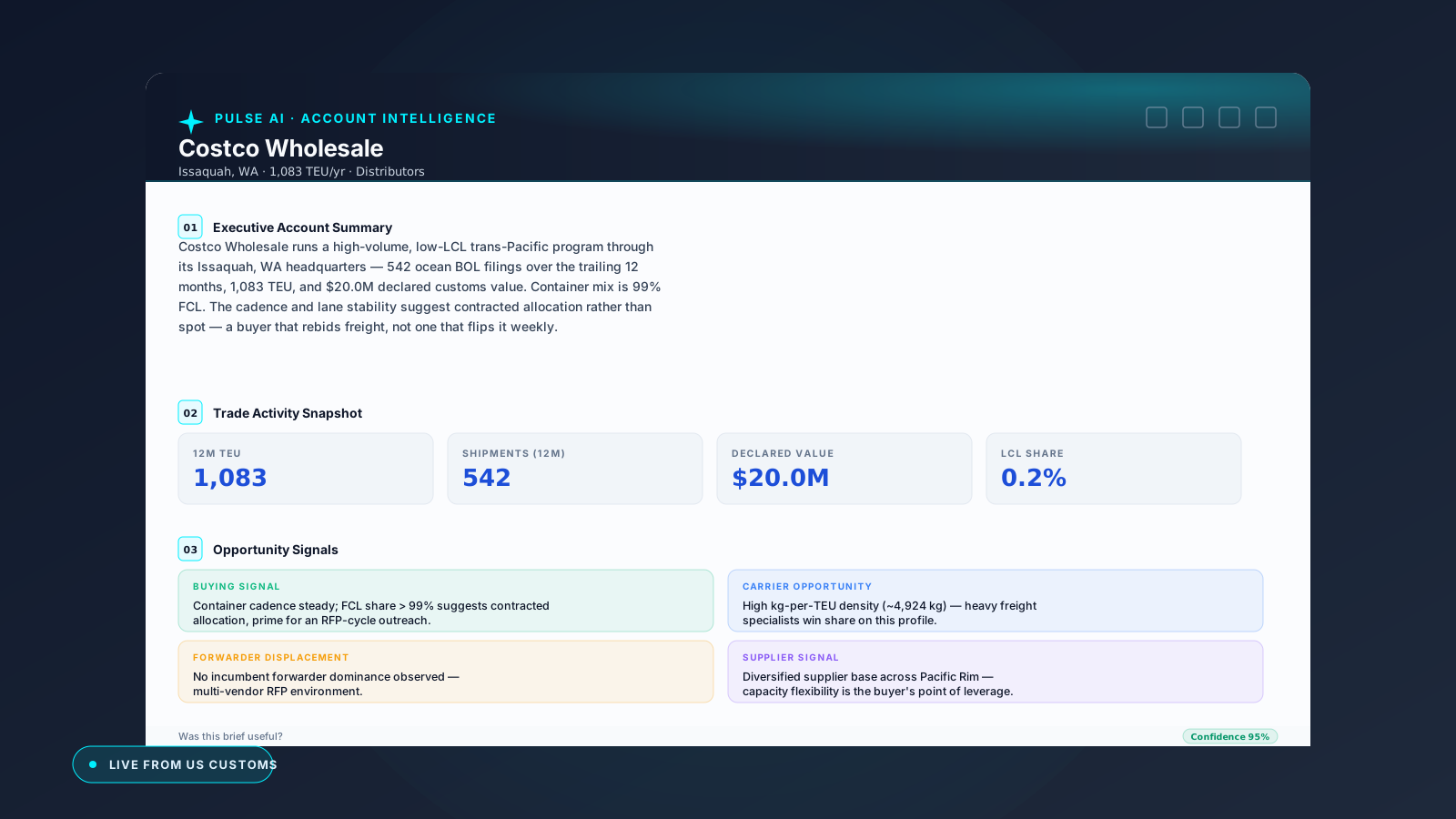
The honest problem with most sales intelligence tools is that the data is fine — the interface is what kills you. You know what you want to find. You just can't translate it into the seventeen filters, three dropdowns, and two boolean expressions the tool requires. So you give up, paste a CSV, and prospect the same accounts everyone else is calling.
Pulse AI is our answer to that problem. It is a natural-language interface sitting on top of the same 124M+ Bill of Lading filings, contact graph, and lane intelligence that powers the rest of LIT. You ask in plain English. It answers with a ranked list, a brief on each account, and a draft outreach sequence grounded in the actual shipment data.
What 'natural language' actually means here
It is not a wrapper around ChatGPT that hallucinates carrier names. Pulse AI parses your question, decomposes it into a structured query against our trade graph, runs that query, and returns real rows you can act on. Ask 'who is importing lithium-ion battery components from Vietnam in the last 90 days, sized over 100 TEU' and you get an actual list — not a vibe check. Ask 'which Tesla suppliers shifted carriers last quarter' and you get the importers, the old carrier, the new carrier, and the month it happened.
The questions that work best are the ones a smart analyst would ask if you handed them a SQL warehouse and forty-eight hours. We've trained Pulse on those patterns. Things like: 'show me importers adding West Coast lanes in the last 60 days,' 'which of my saved accounts had a volume spike over 25% MoM,' 'who is sourcing from suppliers in the Pearl River Delta and has a US warehouse in the Midwest.' Each one becomes an executable query.
Why grounded sequences out-perform generic templates
Once Pulse has surfaced the list, the second move is the outreach. We do not write generic 'I noticed your company' emails. The sequence draft Pulse produces references the actual lane mix, top suppliers, recent carrier moves, and the specific shipment changes that make this account interesting right now. A drafted opener will sound like: 'Saw your shift from CN→USWC to VN→USWC start in February — what's driving the southeast Asia pivot?' That gets replies. Generic does not.
Reply rates we see on Pulse-drafted campaigns sit in the 22–30% range, against the 1–2% standard for cold outreach. The product does not change the truth of selling. It changes the speed at which you can find the right account and write something a buyer will actually respond to.
Three ways teams use Pulse today
First, account discovery at the start of the quarter. AEs run a half-dozen Pulse queries to build their target list, save the surfaced accounts to a watchlist, and let Coach (the signals layer) flag changes. Second, lane-strategy briefs for forwarder sales calls — a customer asks 'what does our routing look like versus our peer set' and an SE pulls a Pulse brief in 90 seconds. Third, customer-success retention: feed Pulse your existing customer list and ask 'which of these accounts has volume down more than 15% MoM' to flag churn risk before renewal.
Getting started
Pulse is built into every LIT account — there is no separate seat or upgrade. The fastest way to feel it is to open the app and ask one question about an account you already know. If Pulse can describe that account back to you in concrete terms — lanes, carriers, recent moves — you'll trust it for the accounts you don't know yet. That trust is the entire game.